Sinus Lift Surgery for Dental Implants: Why Bone Grafting Is Needed and How Successful It Is
What Is a Sinus Lift and Why Is It Necessary?
For patients missing upper molars or premolars, insufficient jawbone can sometimes prevent conventional dental implant placement.
A sinus lift, also called maxillary sinus floor augmentation, is a surgical bone grafting procedure designed to increase the amount of bone available in the posterior upper jaw.
This procedure has been used successfully for decades and is supported by extensive dental implant research.
At South Florida Oral & Maxillofacial Surgery, sinus augmentation may be recommended for patients who have inadequate posterior upper jawbone but would otherwise be good candidates for dental implant replacement.
Depending on the available native bone, a sinus lift may be performed with implant placement during the same appointment or as a separate procedure before implant placement.
Why Do Patients Lose Bone Beneath the Maxillary Sinus?
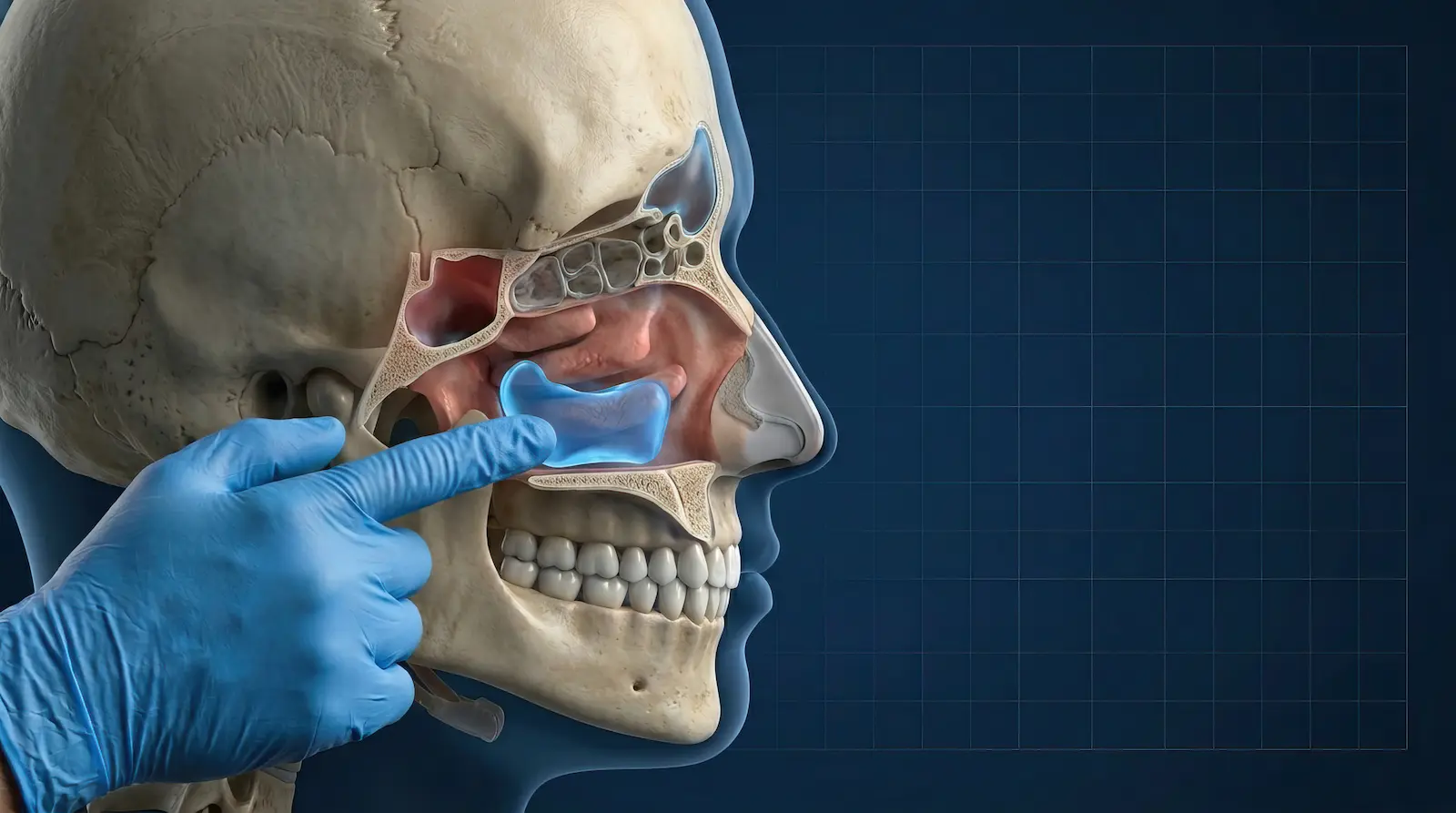
The maxillary sinuses are air-filled cavities located above the upper posterior teeth.
Following tooth extraction, the supporting bone may gradually resorb, while the sinus floor may extend downward into the previously occupied tooth-bearing region.
These changes are particularly common in patients who have been missing upper molars for several years.
For example, a patient may have only 2–3 millimeters of bone between the crest of the upper jaw and the sinus cavity.
Conventional implants require adequate surrounding bone and primary mechanical stability to support healing and eventual function.
When the remaining bone is insufficient, sinus augmentation can create the additional vertical bone volume necessary for successful implant treatment.
How Does a Sinus Lift Work?
During sinus augmentation, the thin lining of the maxillary sinus, called the Schneiderian membrane, is carefully elevated.
Bone graft material is placed beneath the membrane to create additional space for bone regeneration.
Over the following months, the grafted material undergoes biological remodeling, helping establish the bone volume needed for implant support.
There are two common surgical approaches.
Internal Sinus Lift
An internal or transcrestal sinus lift is generally considered when the patient has a moderate amount of existing bone and requires a relatively limited increase in height.
The sinus membrane is elevated through the implant preparation site.
For suitable patients, the dental implant can be placed during the same appointment.
This approach may be particularly useful for selected single-tooth replacement cases.
Lateral Window Sinus Lift
A lateral window sinus lift is used when more substantial bone augmentation is needed.
The surgeon creates a small window in the outer wall of the upper jaw, carefully elevates the sinus membrane, and introduces bone graft material.
This technique allows augmentation of a broader area and can create the bone volume necessary to support one or multiple implants.
When Can the Sinus Lift and Dental Implant Be Performed Together?
One of the most important factors in deciding whether to place the implant during sinus augmentation is the amount and quality of native bone.
When adequate primary implant stability can be achieved, simultaneous sinus augmentation and implant placement may be recommended.
For example, patients with approximately 5–6 millimeters of existing bone may often be candidates for simultaneous treatment.
In selected cases, even 3–4 millimeters of existing bone may be sufficient, depending on the surgical technique, implant design, anatomy, and bone quality.
There is no universally applicable numerical cutoff.
The central consideration is whether the implant can be placed in the correct position with adequate initial stability.
Advantages of Simultaneous Sinus Lift and Implant Placement
- One combined surgical appointment.
- Fewer total surgical stages.
- Shorter overall treatment timeline.
- Bone regeneration and implant healing occur during the same general period.
The implant is generally allowed to heal for several months before the final crown is attached.
When Is a Delayed Sinus Lift Necessary?
In some patients, the amount of remaining bone is extremely limited.
For example, when only 1–2 millimeters of native bone remains beneath the sinus, achieving adequate primary implant stability may not be possible.
In these situations, a staged approach is often more appropriate.
Stage 1: Sinus Augmentation and Bone Grafting
A lateral window sinus lift is performed to create additional bone volume.
The bone graft is protected and allowed to heal before dental implant placement.
Stage 2: Approximately Six Months of Graft Healing
The graft is generally allowed to heal for several months, often approximately six months.
The exact duration depends on the amount of augmentation, the graft material, and the patient's healing response.
Stage 3: Dental Implant Placement
After graft healing, the augmented region is reassessed.
If sufficient bone has developed, the dental implant or implants are placed.
Stage 4: Implant Healing and Final Crown
The implants generally undergo additional osseointegration before restoration.
For many cases, this involves approximately three months of implant healing, although longer periods may be required.
The patient's restorative dentist subsequently fabricates and delivers the final crown or bridge.
A staged sinus lift followed by delayed implant placement may result in an overall treatment period of approximately 9–12 months or longer.
Although this sequence requires more time, it provides a predictable method of reconstructing bone in patients with severe deficiency.
How Successful Are Sinus Lifts?
Sinus floor augmentation is among the most extensively studied bone augmentation procedures in dental implant surgery.
Systematic reviews consistently demonstrate high implant survival in grafted posterior maxillary bone.
A 2024 systematic review and meta-analysis evaluating implant outcomes following sinus augmentation reported:
- Approximately 97.7% implant survival in cases without sinus membrane perforation.
- Approximately 97.1% implant survival in cases involving sinus membrane perforation.
These findings demonstrate that high implant survival can be achieved following sinus grafting, including many cases in which membrane complications are successfully managed.
It is important to understand that these percentages represent outcomes from the included studies, not a guaranteed result for every patient.
Bone graft integration, implant survival, prosthetic success, and complication-free healing are distinct outcomes.
Are Sinus Lifts Predictable for a Single Implant?
Yes.
For patients missing one upper molar or premolar, sinus augmentation can create sufficient bone for placement of an individual implant.
This may involve either a limited internal sinus lift or a lateral window approach, depending on the anatomy.
When sufficient native bone is present, implant placement can often be performed during the sinus lift.
After osseointegration, the implant can support a single customized dental crown.
Can a Sinus Lift Support Multiple Dental Implants?
Yes.
A lateral window sinus lift can augment a larger portion of the posterior maxilla, potentially allowing placement of two or more implants.
These implants may support individual crowns or an implant-supported bridge.
The number of implants, their positioning, the amount of bone augmentation, and the final prosthetic design are considered together during planning.
Although implant survival following sinus augmentation is generally high, the scientific literature does not support assigning one universal success rate to every single-implant case and another to every multiple-implant case.
Bone conditions, surgical technique, and restorative loading are more meaningful predictors than implant count alone.
What Are the Potential Complications of a Sinus Lift?
Like any surgical procedure, sinus augmentation has potential complications.
These may include sinus membrane perforation, swelling, bleeding, infection, graft failure, sinus inflammation, and dental implant failure.
One of the more commonly reported intraoperative complications is perforation of the Schneiderian membrane.
A 2025 systematic review reported a sinus membrane perforation rate of approximately 19.2% across the included lateral-window sinus lift procedures.
Importantly, a membrane perforation does not automatically indicate surgical failure.
Many perforations can be repaired during surgery, allowing grafting and subsequent implant treatment to proceed successfully.
Do All Patients With Upper Jaw Bone Loss Need a Sinus Lift?
No.
Some patients have sufficient bone for conventional implants without grafting.
Others may qualify for short implants, tilted implants, or limited transcrestal sinus elevation.
Patients requiring extensive full-arch reconstruction may also be candidates for remote anchorage techniques, including zygomatic and pterygoid implants.
The most appropriate approach depends on the number and location of missing teeth, the available bone, sinus health, and the final restorative plan.
Frequently Asked Questions
How much bone is needed for a sinus lift and dental implant on the same day?
There is no absolute threshold. Approximately 5–6 millimeters of native bone may provide favorable conditions for simultaneous treatment in many cases, while selected patients with less bone may also qualify.
What happens if I have only 1–2 millimeters of bone?
A staged sinus lift may be recommended. The graft is allowed to heal before the dental implant is placed.
How long does a sinus lift take to heal?
Bone graft maturation commonly requires several months, often approximately 4–8 months depending on the procedure and patient.
Can a sinus lift support two or three implants?
Yes. A lateral window sinus augmentation can create additional bone volume for multiple implants.
Are sinus lifts successful?
Yes. Published systematic reviews report high implant survival rates, commonly in the mid-to-high 90% range.
Can I avoid a sinus lift?
Some patients qualify for alternative implant strategies depending on anatomy and restorative needs.
Sinus Lift and Dental Implant Surgery in West Palm Beach
At South Florida Oral & Maxillofacial Surgery, we use clinical examination and three-dimensional CBCT imaging to determine the amount of available bone and the appropriate surgical approach.
When possible, we aim to combine sinus augmentation and dental implant placement to minimize unnecessary treatment stages.
When native bone is insufficient, a staged bone grafting procedure may offer a more predictable foundation for implant placement.
Patients throughout West Palm Beach, Wellington, Royal Palm Beach, and Palm Beach County can contact our practice for an evaluation.